
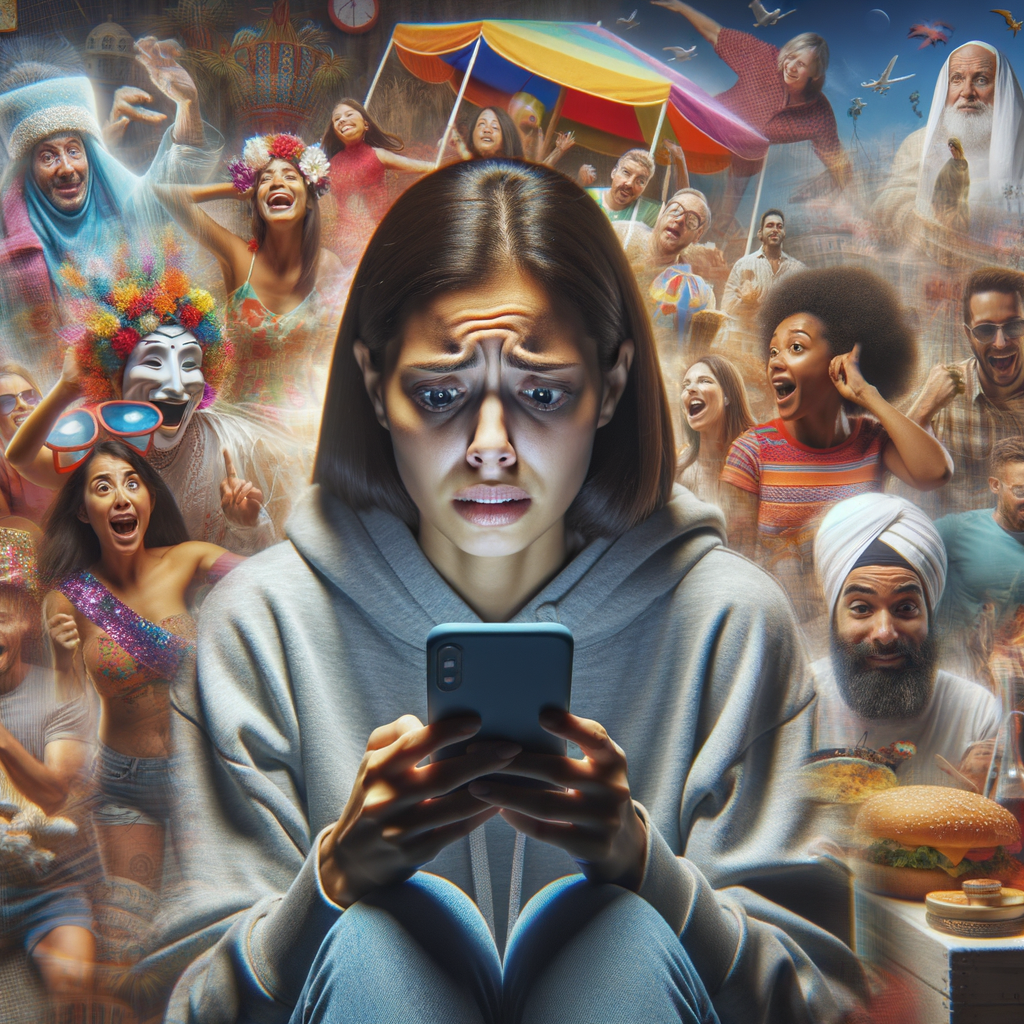
Fear of Missing Out, commonly known as FOMO, is a psychological phenomenon that has become increasingly prevalent in the digital age. The term was popularized in the early 2000s, coinciding with the rise of social media platforms like Facebook. FOMO is characterized by a pervasive apprehension that others might be having rewarding experiences from which one is absent, leading to a desire to stay continually connected with what others are doing. This anxiety is not new; it is deeply rooted in the human desire for social belonging and inclusion, which are fundamental aspects of our psychological well-being [1].
Social media has amplified FOMO by providing constant visibility into others’ lives, exacerbating feelings of exclusion and heightening the need for social approval. Despite its negative connotations, FOMO has also been leveraged in marketing strategies to drive consumer behaviour, particularly in social media, where ephemeral content can create a sense of urgency and exclusivity [2].
Over time, trends indicate a shift in the prevalence of FOMO among internet users, with some demographics reporting a decrease in FOMO feelings, suggesting a growing awareness and management of social media fatigue (source: GlobalWebIndex). However, FOMO continues to be a significant factor influencing social functioning and mental health, with links to increased social network service (SNS) use, anxiety, depression, and lower perceived quality of life [3].
To combat FOMO, experts recommend strategies such as recognizing the impossibility of experiencing everything, defining personal values to guide decision-making, committing to desired activities, and managing social media use to avoid comparing one’s life to the highlight reels of others [4]. Additionally, understanding emotional intelligence and navigating complex emotions can provide a path to overcoming the distress associated with FOMO [5].
As we delve deeper into the intricacies of FOMO, it is crucial to understand its origins, societal trends, and the various coping strategies that can help individuals lead more content and fulfilling lives without the constant fear of missing out.
Origins and psychology
While the term itself is relatively new, the concept of FOMO has been present throughout history. Humans have always been aware of others’ experiences and opportunities, leading to feelings of envy or anxiety about missing out. The advent of modern technology and social media has amplified this phenomenon by providing constant access to the activities and experiences of others.
FOMO is rooted in basic human needs and psychological processes. Self-determination theory highlights three innate needs: competence, autonomy, and relatedness. FOMO is particularly linked to the need for relatedness, which refers to the desire to connect with others and be included in social groups. When individuals perceive that this need is unmet, they may experience FOMO. Additionally, social comparison theory explains how individuals evaluate their own lives to others, often through social media, which can exacerbate feelings of FOMO when they believe others are having more fulfilling experiences.
Social media and demographics
The rise of social media platforms has significantly contributed to the prevalence of FOMO, especially among younger demographics. Social media provides a platform for individuals to share the highlights of their lives, which others may interpret as a more exciting or successful lifestyle, thus triggering FOMO. Cultural and societal factors, such as the pressure to conform to social norms and the bombardment of information, also play a role in shaping the experience of FOMO and its impact on mental well-being.
While age is a significant factor in FOMO experiences, research has not found consistent moderating effects of gender or geographic location on the relationship between FOMO and social media use. This suggests that the fear of missing out is a universally experienced phenomenon, not confined to specific genders or regions. However, individual studies may report varying levels of FOMO across these demographics, indicating the need for further research to understand these nuances fully.
A meta-analysis has shown a robust positive correlation between FOMO levels and both general social media use and problematic social media use (PSNSU) [6]. This relationship is significant as it highlights how FOMO can drive individuals to spend more time on social media, potentially leading to compulsive behaviours and negative psychological outcomes such as anxiety and depression.
In summary, FOMO is a prevalent issue among social media users, particularly younger adults, and is associated with various mental health challenges. While demographic factors such as age play a role in the experience of FOMO, the phenomenon itself is widespread and requires targeted strategies to mitigate its impact on individuals’ well-being.
Implications on behaviour and mental health
FOMO is not only associated with increased social media use but also correlates with various mental health issues. It has been positively linked with depression, anxiety, and neuroticism and negatively with conscientiousness. These associations suggest that individuals experiencing FOMO may be more vulnerable to mental health challenges, which their social media habits could exacerbate.
FOMO can lead to a cycle of needing constant validation and presenting a distorted self-image, which negatively impacts self-esteem and is associated with depressive symptoms. The compulsion to check social media for updates can also heighten anxiety. Understanding the psychological and social mechanisms behind FOMO can help individuals recognize and manage feelings of vulnerability and unease that arise from social comparisons and the desire to keep up with trends and activities.
Coping strategies
Addressing FOMO in social media users involves understanding the triggers and implementing strategies to reduce its impact. Potential strategies include encouraging mindful social media use, promoting real-life interactions, and fostering an environment where individuals can discuss their FOMO experiences without judgment. Additionally, educational programs that focus on digital literacy and the responsible use of technology could help users navigate social media in a way that minimizes FOMO and its associated negative effects.
Mindfulness has been identified as a moderating factor in the relationship between FOMO and its negative consequences, such as depression, social anxiety, and compulsive behaviours. Mindfulness-based interventions can help individuals become more aware of their thoughts and feelings, reducing the impact of FOMO. Mindfulness practices can help individuals stay grounded in the present moment, replacing fear with facts and intuition. By being mindful, one can appreciate what is currently available rather than being preoccupied with the endless possibilities that could lead to FOMO [7].
Self-reflection is another powerful tool in combating FOMO. Asking oneself reflective questions about the necessity and reality of available options can demystify the allure of seemingly better alternatives. Consulting with a trusted group of 3 to 5 people can also provide diverse perspectives and facilitate a tiebreaker in decision-making scenarios [7].
Additionally, setting boundaries for social media use, focusing on personal values and goals, and fostering real-life connections can mitigate the effects of FOMO. Reducing social media usage through a digital detox or by setting limits can decrease the exposure to triggers of FOMO. Curating one’s social media feed to include more positive content and less of what induces feelings of inadequacy can also be beneficial [8].
Finally, accepting that life is composed of highs and lows and that one cannot participate in every possible experience is essential in overcoming FOMO. Practising gratitude for the present circumstances and the experiences one does have can foster contentment and diminish the longing for alternative experiences [9].
References
- [1] Emily Laurence (2023). The Psychology Behind The Fear of Missing Out (FOMO). Forbes Health. Updated Sep 20, 2023.
- [2] Nestor Gilbert (2024). 45 interesting FOMO statistics: 2024 Effects, Demographics & Marketing, by Nestor Gilbert. Finances Online. Updated Mar 17, 2024.
- [3] Jon D. Elhai, Haibo Yang, & Christian Montag (2021). Fear of missing out (FOMO): Overview, theoretical underpinnings, and literature review on relations with severity of negative affectivity and problematic technology use. Brazilian Journal of Psychiatry, 43(2), 203–209. doi.org/10.1590/1516-4446-2020-0870
- [4] Ahona Guha (2021). Managing the Fear of Missing Out. Psychology Today. Updated Jun 17, 2021.
- [5] Hilary Jacobs Hendel (2022). The Secret to Getting Over FOMO. Psychology Today, Updated Jun 1, 2022.
- [6] Giulia Fioravanti, Silvia Casale, Sara Bocci Benucci, Alfonso Prostamo, Andrea Falone, Valdo Ricca, & Francesco Rotella (2021). Fear of missing out and social networking sites use and abuse: A meta-analysis. Computers in Human Behavior, 122. doi.org/10.1016/j.chb.2021.106839
- [7] Ali Pattillo (2020). The inventor of FOMO explains how to overcome decision paralysis. Inverse. Updated Feb 20, 2024.
- [8] Elizabeth Scott (2022). How to Deal With FOMO in Your Life: The Origin of Fomo and How It Affects Our Health. Verywell Mind. Updated Nov 16, 2022.
- [9] Ellen Hendriksen (2016). How to Overcome FOMO. Psychology Today. Updated Aug 25, 2016.
Further Reading
- Anushree Tandon, Amandeep Dhir, Intesar Almugren, Ghada Naif AlNemer, & Matti Mäntymäki (2021). Fear of missing out (FoMO) among social media users: a systematic literature review, synthesis and framework for future research. Internet Research. ISSN: 1066-2243
- Yuting Dong, Min Chen, Zhigang Wu, & Zilin Zhang (2024). Covid-19 psychological pressures, depression and FOMO: the mediating role of online social support and emotional regulation. BMC Psychology, 12(116).
- Christian Montag, & Sebastian Markett (2023). Social media use and everyday cognitive failure: investigating the fear of missing out and social networks use disorder relationship. BMC Psychiatry 23(872).
- Irvin Goldman, Charles H Davis, & Rory Austin Clark (2023). Exploring subjective sociocultural understandings of “fear of missing out” (FoMO) and the unsettled self in a time of deep mediatization. New Media and Society. doi.org/10.1177/1461444823117796
- Christopher T Barry, & Megan Y. Wong (2020). Fear of missing out (FoMO): A generational phenomenon or an individual difference?. Journal of Social and Personal Relationships, 37(12), 2952-2966. doi.org/10.1177/0265407520945394
- Mayank Gupta, & Aditya Sharma (2021). Fear of missing out: A brief overview of origin, theoretical underpinnings and relationship with mental health. World Journal of Clinical Cases, 9, 4881-4889. doi.org/10.12998/wjcc.v9.i19.4881
- Emily Scheinfeld, & Heather L. Voorhees (2022). How Social Media, FoMO, and Isolation Influence Our Perceptions of Others Who “Break the Rules”. Social Media + Society, 8(2). doi.org/10.1177/20563051221103841
- Jian Mao, & Bin Zhang (2023). Differential Effects of Active Social Media Use on General Trait and Online-Specific State-FoMO: Moderating Effects of Passive Social Media Use. Psychology Research and Behavior Management, 16, 1391–1402. doi.org/10.2147/PRBM.S404063
- Ellen Groenestein, Lotte Willemsen, Guido M van Koningsbruggen, & Peter Kerkhof (2024). Fear of missing out and social media use: A three-wave longitudinal study on the interplay with psychological need satisfaction and psychological well-being. New Media & Society, doi.org/10.1177/14614448241235935
- Jiayu Li, Yuhong Zhou, Yang Liu, Zhixiang Yu, & Xuemei Gao (2024). Profiles of fear of missing out and their social media use among young adults: A six-month longitudinal study, Addictive Behaviors, 149, doi.org/10.1016/j.addbeh.2023.107899
- Marie Hattingh, Amandeep Dhir, Peter Ractham, Alberto Ferraris, & Dorra Yahiaoui (2022). Factors mediating social media-induced fear of missing out (FoMO) and social media fatigue: A comparative study among Instagram and Snapchat users. Technological Forecasting and Social Change, 185. doi.org/10.1016/j.techfore.2022.122099
- Sajjad Hussain, Ali Raza, Ali Haider, Muhammad Ishtiaq Ishaq, & Qurat-ul-ain Talpur (2023). Fear of missing out and compulsive buying behavior: The moderating role of mindfulness. Journal of Retailing and Consumer Services, 75. doi.org/10.1016/j.jretconser.2023.103512.
- Marina Milyavskaya, Mark Saffran, Nora Hope, & Richard Koestner (2018). Fear of missing out: prevalence, dynamics, and consequences of experiencing FOMO. Motivation and Emotion, 42, 725–737. doi.org/10.1007/s11031-018-9683-5
Leave a Reply